
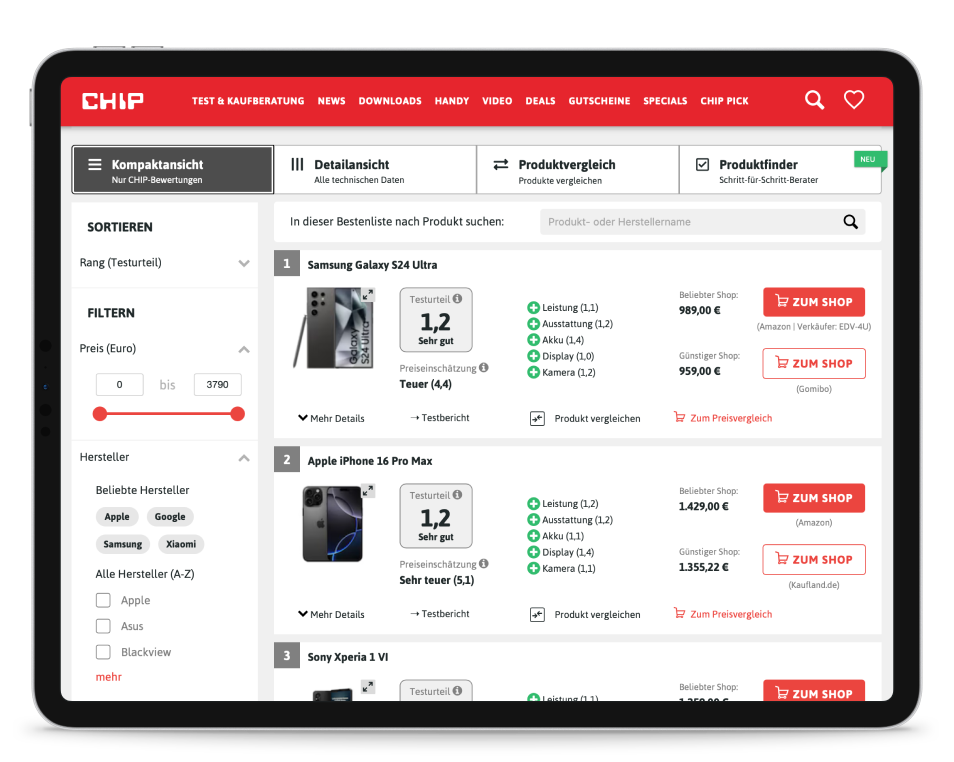
Chip is one of the largest online platforms for consumer technology in Germany, reaching around 1.5 million users per month. The company tests a wide range of devices in its in-house lab and publishes independent reviews. With these articles, Chip aims to bridge the gap between product advice and price comparison — helping users make more informed purchasing decisions.
Our goal was to understand how test results, editorial reviews, and price comparisons could work together to deliver the greatest value for our users. In addition, we aimed to develop validated personas and an experience map to guide future product decisions and ensure a user-centered approach across teams.
At Chip, I was the UX Designer responsible for the entire product-recommendation and price-comparison experience. Our product team operated under the Marty Cagan model with clearly defined KPIs, consisting of two Product Owners, one UX Designer, and five developers.
Our focus was to deeply understand our users and provide the CEO with clear, evidence-based recommendations from both a design and business perspective. To support this, I initiated a comprehensive research effort on product recommendations and price comparison.
When our hypotheses were confirmed, we rapidly updated our prototypes and conducted usability evaluations. This iterative, research-driven approach allowed us to quickly uncover user problems and continuously refine the product.
Together with my Product Owner, key stakeholders, and the corporate development team, we defined the scope of the research and formulated the central questions. Our guiding principle throughout the process was: “Where might we be wrong?” This mindset helped us challenge existing assumptions early and focus on uncovering real user needs.


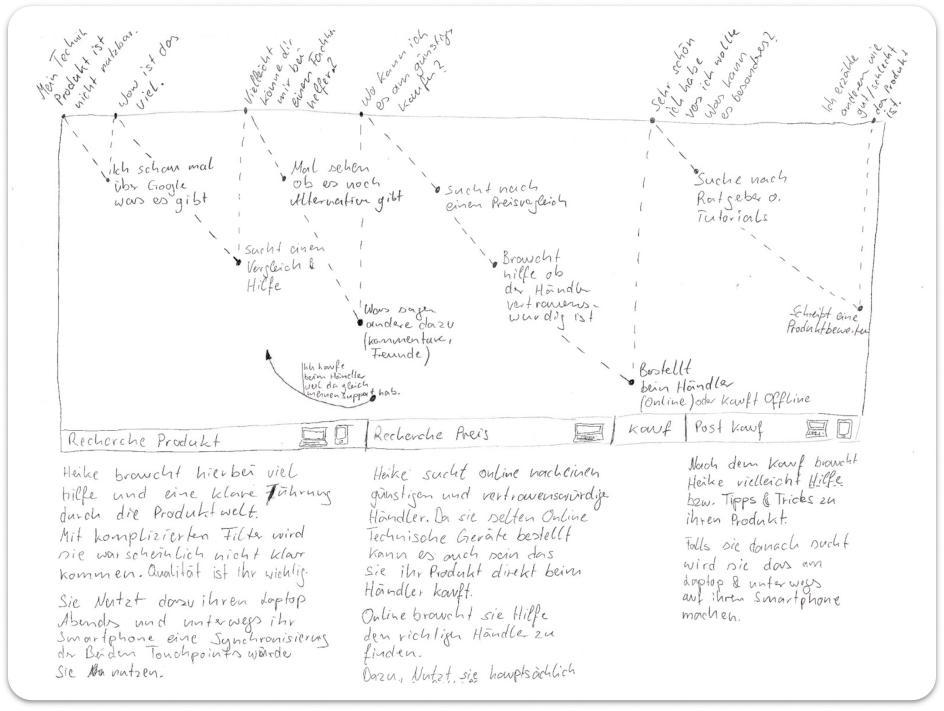
To validate our hypotheses, we used a mix of research methods, including problem interviews, solution interviews, and card sorting. We also conducted field studies by visiting electronics retailers such as MediaMarkt and Saturn, where we spoke directly with customers in their natural decision-making environment.
In total, we interviewed around 120 people, generating rich insights into user needs, behaviors, and purchasing patterns.

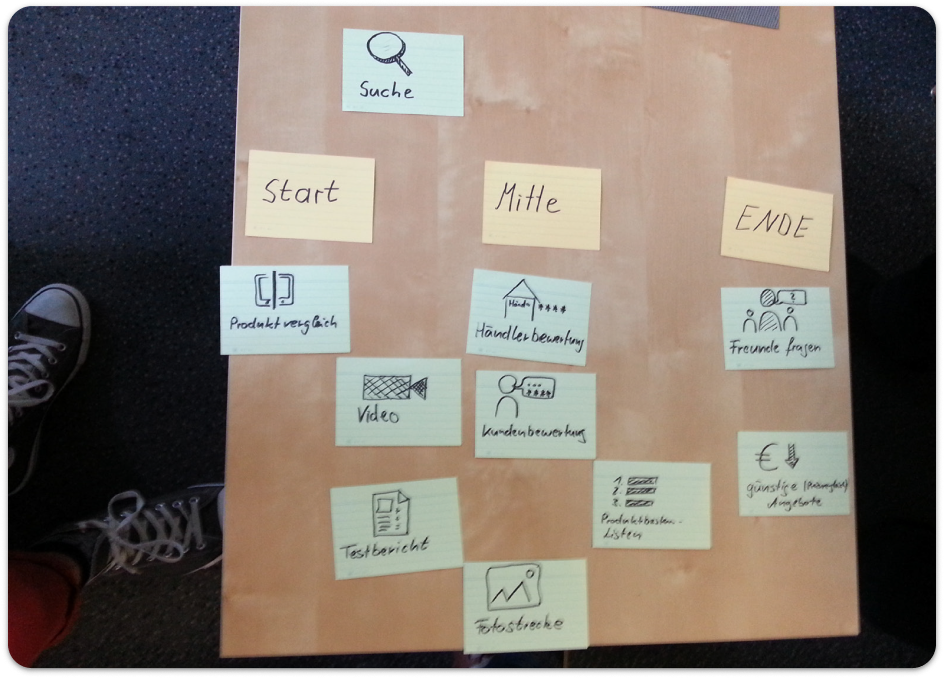
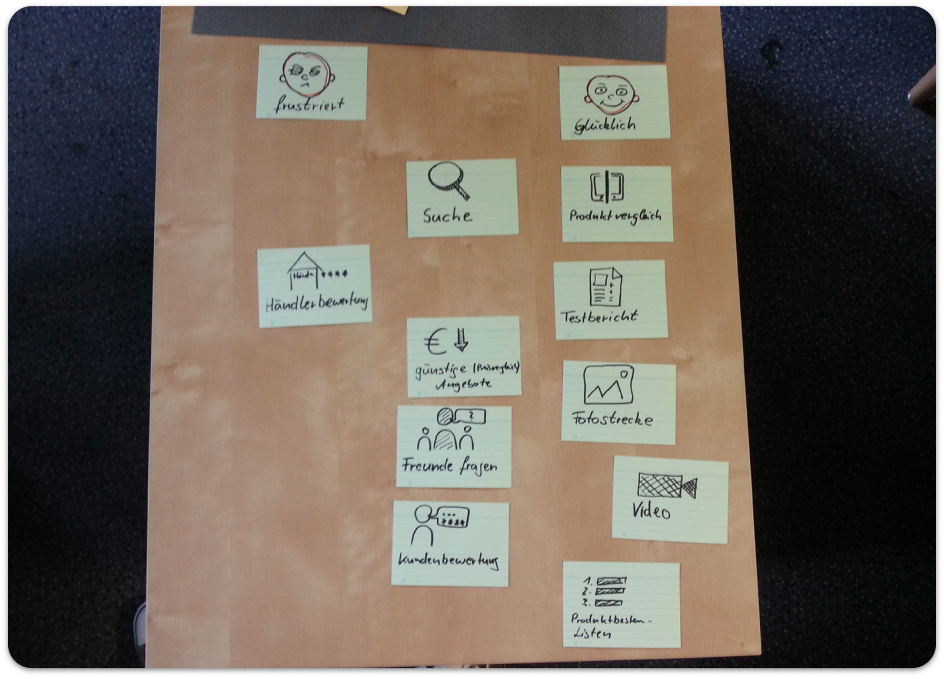
We used an entire wall in our office to visualize all insights gathered during the interviews, creating a clear and structured overview of our findings. This wall evolved into a comprehensive customer journey map, organized by phases, experiences, actions, and behaviors for each persona.
This visual approach helped us quickly identify patterns, gaps, and opportunities across the journeys.
After completing the interviews, we developed five personas and prioritized them based on their strategic relevance to the business. We then created detailed experience maps that captured the key interactions and emotional drivers for each persona, providing a strong foundation for user-centered product decisions.
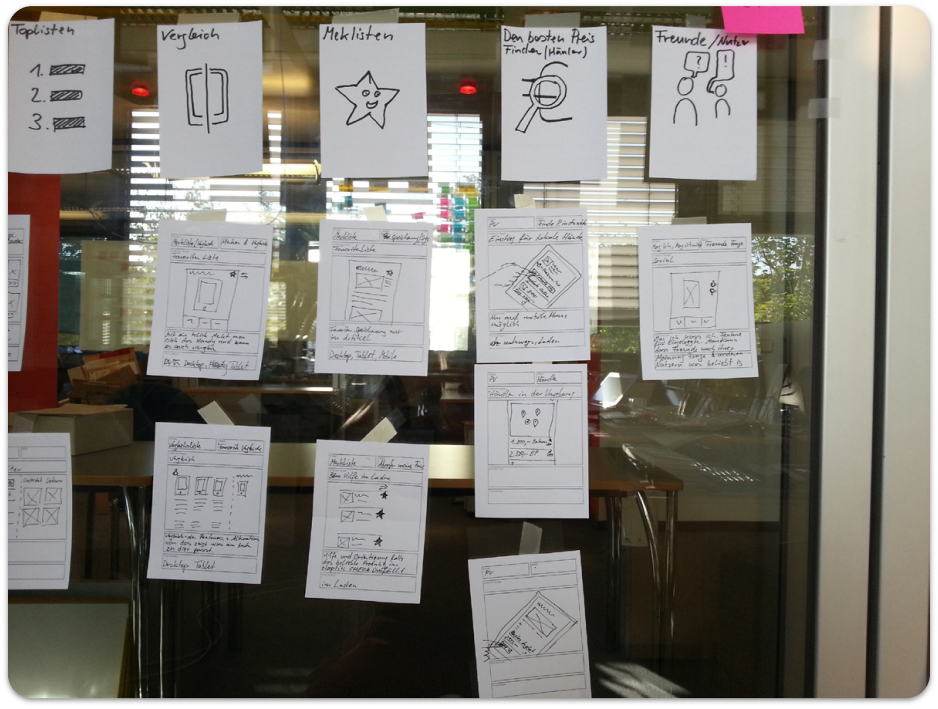
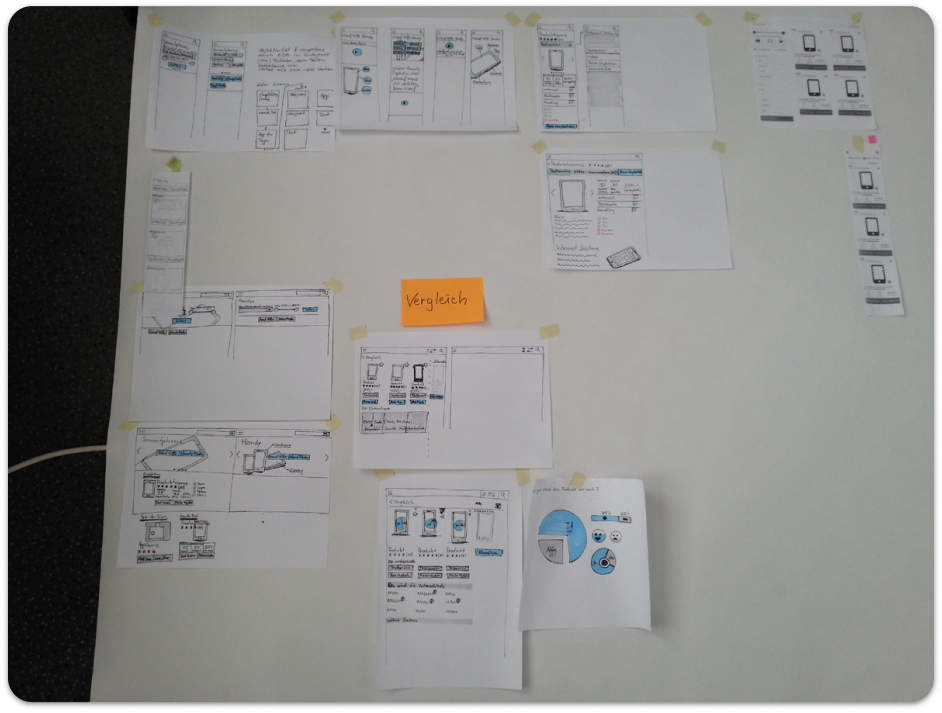
Throughout and after the interview phase, we ran several ideation sessions to align our product concepts more closely with the customer journey. These collaborative workshops enabled us to generate innovative solutions and seamlessly integrate user needs into our product strategy.
This project demonstrated how a user-centered approach can significantly improve the performance of an existing product. The research insights guided multiple departments in refining their areas of responsibility, ultimately contributing to a measurable increase in revenue and creating a more cohesive, user-driven product direction.